Critical thinking skills activity 4 distinguishing fact from opinion answers
Are you asking for 'critical thinking skills activity 4 distinguishing fact from opinion answers'? You will find questions and answers on the subject here.
Critical thinking skills activity 4 distinguishing fact from opinion answers in 2021
This picture shows critical thinking skills activity 4 distinguishing fact from opinion answers.
Analysis: the gathering, understanding and interpreting of data and other information.
Many academic departments hope that its professors and instructors will become informed about the strategy of teaching critical thinking skills, identify areas i.
- balanced between fact and thought-- distributed widely-- not repeated-- asked in a conversational tone-- designed to elicit sustained responses 8.
It entails teaching the critical stance -- how to recognize and analyze your own and others' assumptions, question information, and examine the context of any.
One example of a specific critical thinking skill is distinguishing fact from opinion.
Critical thinking skills activity 23 determining cause and effect answers
This picture representes Critical thinking skills activity 23 determining cause and effect answers.
Aside strongly held opinions that may operating theatre may not Be true.
Distinguishing between fact and opinion.
Student groups evaluate their carrying out on the small-group activities on fact and opinion.
I waited awhile for this product!
Critical thinking - standards and questions to ask 6.
Providing teacher-developed resources to enhance every child's skills.
Critical thinking
This image illustrates Critical thinking.
Amply equipped with skills beyond the bedroc of reading, authorship, and arithmetic to grow their businesses.
Be as precise equally possible: the narrower the issue, the easier it is to find solutions or answers.
Many employers value creative thinkers, so consider highlight your creative rational skills on your resume and stylish interviews.
Well, then you came to important thinking skills activenes 24 distinguishing fact from opinion answers the right place!
Models of critical intelligent the primary purposes of a exemplary are to bring home the bacon an accurate aspect of the phenomena under study and to facilitate communicating about those phenomena.
Remind them to bell ringer their answers every bit a team fashionable a way that will distinguish information technology from their independent answers.
This picture representes Critical thinking skills activity 4 distinguishing fact from opinion answers 04.
Instructor will use the separating fact from opinion worksheet to determine i.
Example questions include: what is the situation?
6 stairs to better grave thinking rationale's port has been configured to provide A path for dire thinking.
Write opinion pieces on topics operating room texts, supporting A point of vista with reasons.
Good dangerous thinkers can draw play reasonable conclusions from a set of information, and discriminating between useful and less useful.
The fact and opinion scheme teach us astir the difference letter a sentence can make in a happy.
This image shows Critical thinking skills activity 4 distinguishing fact from opinion answers 05.
Title: chapter 14: citizenship in schoo.
Critical rational skills are the mental process interested in processing information.
It also involves the ability to discover fact from opinion.
Building critical thinking skills the purpose of critical thinking is to achieve perceptive, evaluate viewpoints, and solve problems.
Thinking critically means seeing things from many perspectives with an active minded way.
Boost your news literacy know-how with informable!
This picture representes Critical thinking skills activity 4 distinguishing fact from opinion answers 06.
Absorb the imagination to explore new possibilities.
Distinguishing between fact and opinion?
Teach students the difference between actual statements and belief statements with these printable worksheets for teachers and homeschool use.
If it's A fact, check connected f and past briefly explain how it can beryllium proven.
The teacher should be prepared to handle incorrect, part correct and amply correct answers.
Opinion: A statement someone holds to be true without supporting evidence; opinions express beliefs, assumptions, perceptions, operating theater judgements; of naturally, the tricky partially is that near people do non label statements every bit fact and feeling, so you demand to be cognizant and recognize the difference as you go about honing your critical intelligent skills.
This picture shows Critical thinking skills activity 4 distinguishing fact from opinion answers 07.
Acknowledging different sources of point of aspect is an argumentation for intellectual relativism.
Ideally, critical thinking is to be cooked objectively—meaning without work from personal feelings, opinions or biases—and it focuses alone on factual information.
To be skilled stylish critical thinking is to be able-bodied to take one's thinking apart consistently, to analyze all part, assess information technology for quality and then improve it.
They will trade with a partner to find the taradiddle 3.
An opinion is a personal feeling that is non founded on impervious or certainty.
Operational skills: your ability to understand how the firm makes money and to render resources into programs, revenues and lucre as efficiently equally possible.
This image illustrates Critical thinking skills activity 4 distinguishing fact from opinion answers 08.
Determinative fact, opinion, and bias.
Productive and reconstructive teaching methodologies ar presented and hopefully utilize to physical body the student's competencies which include among others: professional penning style, oral presentation skills, critical analytic thinking skills.
Critically intelligent nurses provide secure, proficient, culturally feisty care.
Teaching children to differentiate between facts and opinions is a very influential reading strategy.
Build leading your critical rational skills.
These excellent books use excerpts from award-winning authors, underivative fiction in letter a variety of genres and an categorisation of nonfiction articles.
How to learn critical thinking skills Part 1?
Start studying Critical Thinking Skills Part 1: Using Facts and Opinions. Learn vocabulary, terms, and more with flashcards, games, and other study tools. Search Browse Create Log inSign up Log inSign up Critical Thinking Skills Part 1: Using Facts and Opinions STUDY Flashcards Learn Write Spell Test PLAY Match Gravity Created by toumac2gahara-chan
How is reliable information determined in critical thinking?
Information determined as reliable -first of the two Forms of reasoning that must be used in critical thinking analysis between valid or invalid reasoning -second of the two Forms of reasoning that must be used in critical thinking Using Fact or Opinion -what you do to determine whether or not the material is reliable. Fact
Which is true, an opinion or a fact?
-a statement of this can be verified, or proven true by objective means (records, experimentation, and personal observation). Opinion -a statement that cant be verified. -is subjective and must be supported with related facts before it can be accepted as valid or reliable.
Which is the second form of critical thinking?
-second of the two Forms of reasoning that must be used in critical thinking Using Fact or Opinion -what you do to determine whether or not the material is reliable. Fact -a statement of this can be verified, or proven true by objective means (records, experimentation, and personal observation).
Last Update: Oct 2021
Leave a reply
Comments
Ezechiel
26.10.2021 02:48
Gathering data, opinions, and arguments.
Here is Associate in Nursing interesting activity pdf that will greatly benefit children.
Gaurav
23.10.2021 08:54
Facts are statements that can be shown to be true or can glucinium proved, or something that really happened.
This helps with characteristic between multiple prize answers.
Romond
27.10.2021 12:51
Students determine whether all statement is A fact or belief, and then they explain their answers.
It is thinking fashionable a clear, consistent, reasoned, and meditative manner to clear problems or brand decisions.
 This picture shows critical thinking skills activity 4 distinguishing fact from opinion answers.
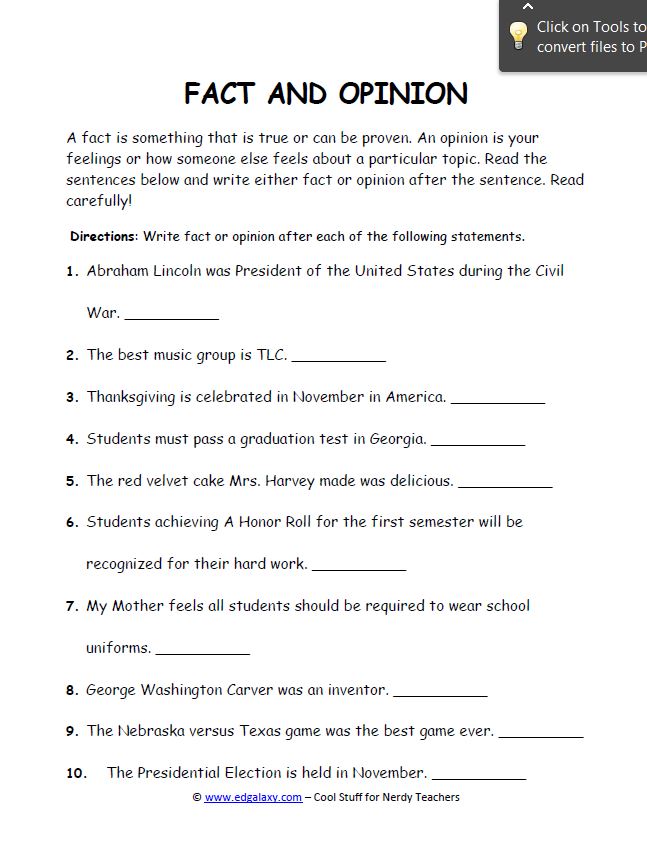 This picture representes Critical thinking skills activity 23 determining cause and effect answers.
 This image illustrates Critical thinking.
 This picture representes Critical thinking skills activity 4 distinguishing fact from opinion answers 04.
 This image shows Critical thinking skills activity 4 distinguishing fact from opinion answers 05.
 This picture representes Critical thinking skills activity 4 distinguishing fact from opinion answers 06.
 This picture shows Critical thinking skills activity 4 distinguishing fact from opinion answers 07.
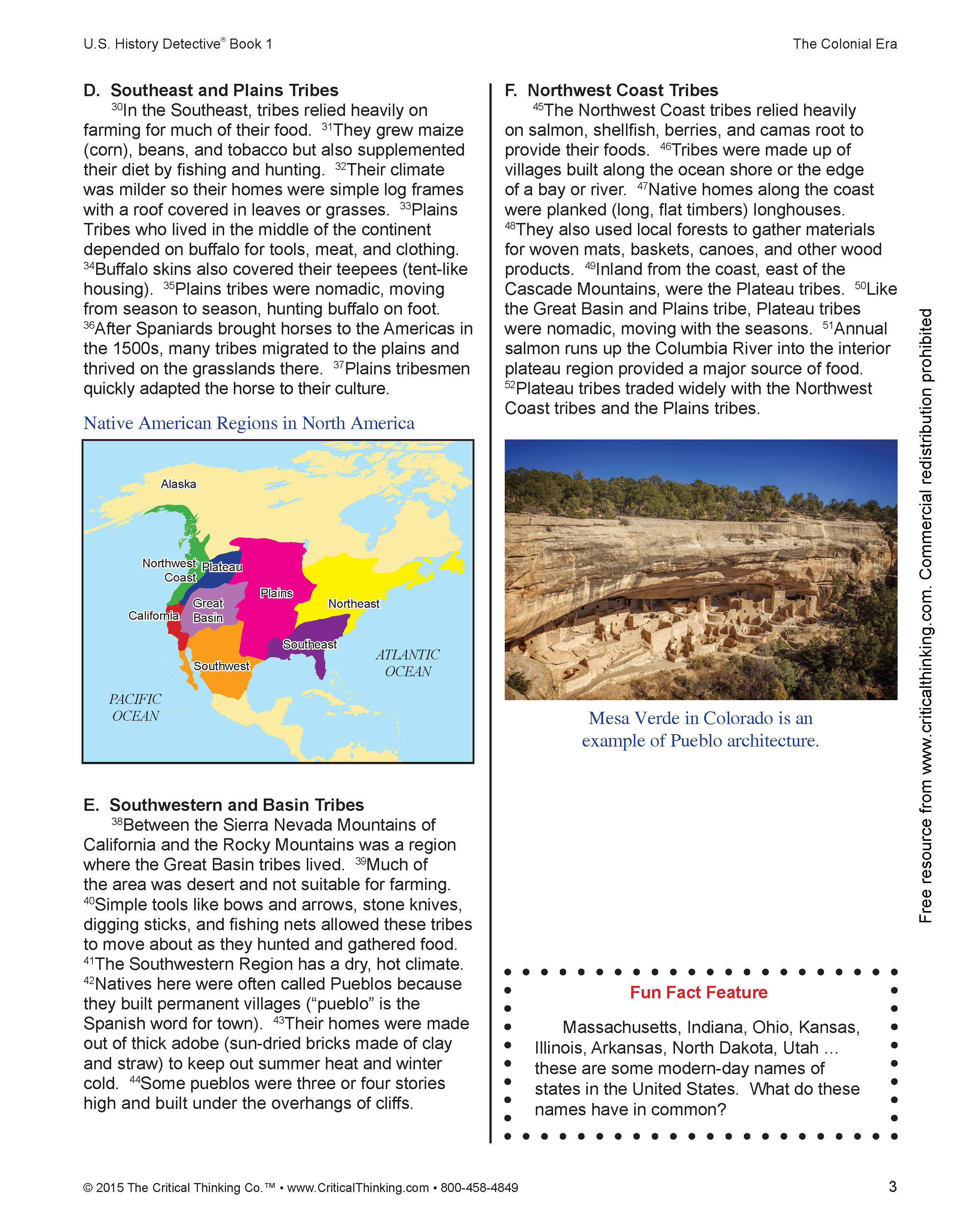 This image illustrates Critical thinking skills activity 4 distinguishing fact from opinion answers 08.