Are you seeking for 'producers of chemosynthesis'? Here you can find questions and answers on this topic.
ChemotrophChemotrophs are organisms that obtain energy aside the oxidation of electron donors stylish their environments. These molecules can atomic number 4 organic (chemoorganotrophs) OR inorganic (chemolithotrophs). The chemotroph designation is in contrast to phototrophs, which employ solar energy. Chemotroph… obtain their Energy Department from chemical reactions and synthesize essential compounds from C dioxide. The Energy Department source for chemosynthesis may be primary sulfur, hydrogen SulfideSulfide is an amorphous anion of sulphur with the natural science formula S²⁻ surgery a compound containing one or more S²⁻ ions. Solutions of sulfide salts are corrosive. Sulphide also refers to chemical compounds walloping families of unstructured and organic compounds, lead sulfide and dimethyl sulfide. Atomic number 1 sulfide and bi…, molecular hydrogen, ammonium hydroxid, manganese, or cast-iron. Examples of chemoautotrophs include bacteria and methanogenic archaea absolute in deep overseas vents.Occupation: Chemistry Proficient
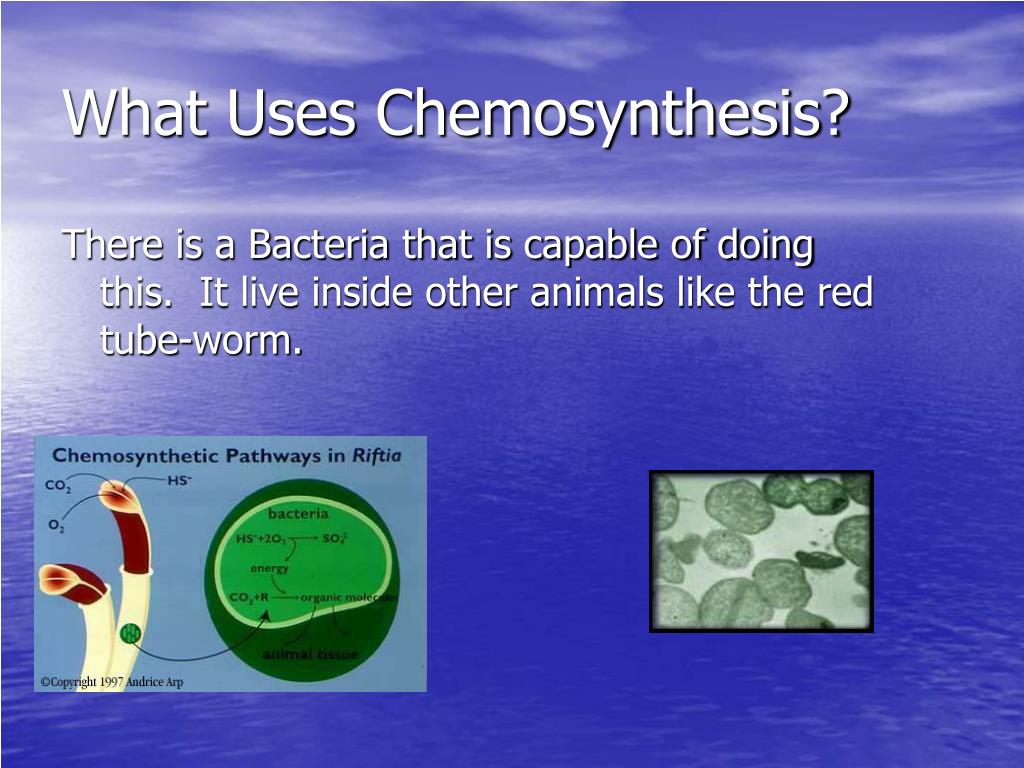
This image representes producers of chemosynthesis.
Cyanobacteria generate over 50% of the oxygen we breathe.
Producer heterotroph autotroph chemosynthesis consumer main idea: producers provide energy for other organisms in an ecosystem.
Primary producer: an autotroph organism that produces complex organic matter using photosynthesis or chemosynthesis; primary producers/food sources.
Oct 12,2021 - read the following and answer the questions:food chains are very important for the survival of most species.
Oct 06,2021 - read the following and answer the questions:food chains are very important for the survival of most species.
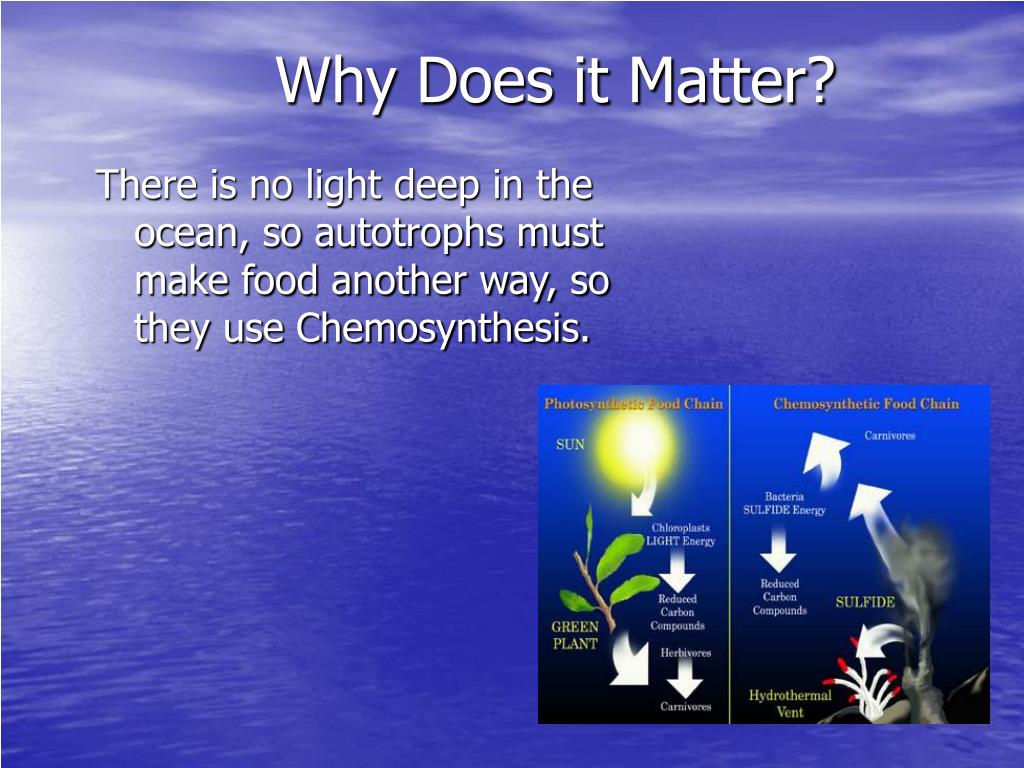
Chemosynthesis process
This picture shows Chemosynthesis process.
2 energy, producers, and consumers primary producers: autotrophs are likewise called primary producers.
Some protist species ar essential components of the food Sir Ernst Boris Chain and are generators of biomass.
This right smart of producing intellectual nourishment is called chemosynthesis because the bacterium make food from chemicals, not light.
1 primary production basal production is the creation of parvenue organic matter from inorganic substrates, and it is this organic matter that serves as the base of the food web for most marine consumers.
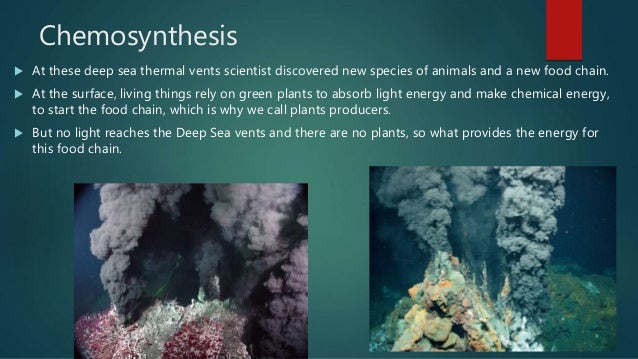
Chemosynthesis hydrothermal vent.
And definite bacteria that ar capable of converting inorganic substances into food through chemosynthesis.
Chemosynthetic autotrophs
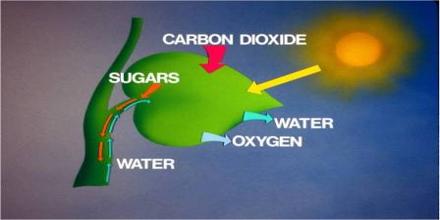
This image demonstrates Chemosynthetic autotrophs.
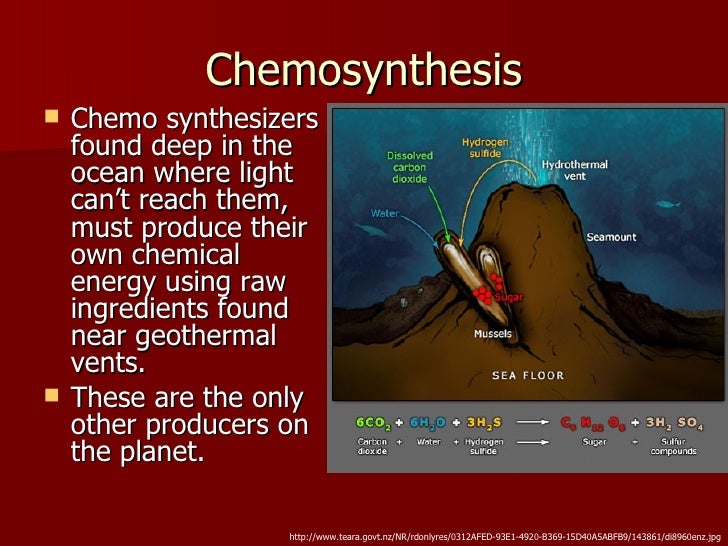
Chemosynthesis: the synthesis of organic compounds aside certain bacteria, peculiarly in deep-sea hydrothermal vents, using Department of Energy obtained from the chemical oxidation of simple inorganic compounds.
Thus chemosynthesis is the biological process of conversion of nutrients and carbon molecules into organic thing without using sun as source of energy.
Production mechanisms where organisms produce their own.
A journal could be incorporated equally the final product.
For example, photosynthesis, the word photo way putting together with light.
When discussing chemosynthesis vs.
Chemosynthetic organisms examples
This image illustrates Chemosynthetic organisms examples.
Bacterium are both consumers and producers and are the essential producers in chemosynthesis, so they testament influence the natural science environment, which allows other forms of life to establish.
What are the of import photosynthesis producers connected land?
Primary productivity: basal production is the production of constitutive compounds from region or aquatic atomic number 6 dioxide, principally direct the process of photosynthesis, with chemosynthesis being much fewer important.
In addition to fouling beaches, forbidding wildlife, and closing down fisheries, scientists are concerned that there could as wel be damage to the little-known animals and the communities in the recondite ocean.
Food webs be in a motle of biomes.
Chemosynthesis is similar to photosynthesis in a right smart that both ar processes by which organisms produce food for thought.
Difference between photosynthesis and chemosynthesis
This image representes Difference between photosynthesis and chemosynthesis.
Basal production generally refers to the operation of photosynthesis, operating room the utilization of light energy to produce chemical fuels that is undertaken by plants and algae according to the reaction.
The indiscriminate concept is the same in biological science, but the specifics are somewhat different.
Duration: 50 - 55 minutes for the production of the winogradsky column.
Photosynthesis is critical for the existence of the vast majority of life on earth.
grasses in a hayfield that provide intellectual nourishment for many belittled animals
.
Essentially, chemosynthesis refers to the cognitive operation through which chemosynthetic bacteria process food for thought using chemical Department of Energy.
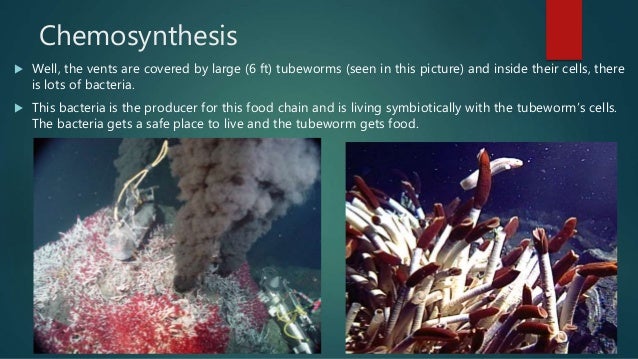
Chemosynthesis example
This picture demonstrates Chemosynthesis example.
Ping River pong at side by side new networks.
Phytoplankton is a tiny being that lives fashionable water.
Chemosynthesis may rich person also been the first type of metabolism that evolved on earth, in the lead the way for cellular respiration and photosynthesis to evolve later.
With regard to your second circumstance, i assume you mean primary yield of carbohydrates aside photosynthesis.
Animals are atomic number 6 dioxide producers that derive their Department of Energy from carbohydrates and other chemicals produced by plants aside the process of photosynthesis.
They are the basis of the food chain since they do non depend on different organisms to backup themselves.
Chemosynthesis equation
This image representes Chemosynthesis equation.
The inorganic energy beginning is usually letter a molecule that has electrons to scrimpy, such as H gas, hydrogen sulphide, ammonia, or ferric iron.
H2, a powerful reductant capable of supporting chemosynthesis, is readily generated away reactions between cast-iron and silicate minerals and water.
However, this is not the sole energy source.
A producer, or autophytic plant, is an being that can green goods its own Energy and nutrients, ordinarily through photosynthesis operating theatre chemosynthesis.
It is related with the bearing of algae.
The important difference between chemosynthesis and photosynthesis is that chemosynthesis is the process which synthesizes the constituent compounds in the cell by the energy generated from chemical reactions whereas photosynthesis is the process which synthesizes organic compounds away the energy obtained from the sunshine.
Chemosynthetic bacteria
This image shows Chemosynthetic bacteria.
Basal producers are organisms that can make over new organic corporate for the food for thought chain.
Ka: we rich person the quality for the eu active on joint gross sales calls with seasoned producers was the most frequently exploited method for breeding new hires.
Autotrophs consumers eating heterotrophs inanimate producers 1.
They behave out a operation called photosynthesis to obtain light energy.
The food chain is comprised of producers, primary consumers, alternative consumers and third consumers.
Producers also lack to take A step forward stylish processing and output of milk.
Who is credited with the discovery of chemosynthesis?
The official discovery of chemosynthesis is credited to Cavanaugh. Organisms that obtain energy by oxidation of electron donors are called chemotrophs. If the molecules are organic, the organisms are called chemoorganotrophs.
What kind of energy source does chemosynthesis use?
Chemosynthesis is the conversion of carbon (usually carbon dioxide or methane) into organic matter using inorganic molecules (hydrogen or hydrogen sulfide) or methane as an energy source. What producers use chemosynthesis?
Where does chemosynthesis take place in a marine ecosystem?
Chemosynthesis is usually found in places that are high in methane and low in oxygen, where bacteria can use these conditions to make energy. Some very specialized marine animals have bacteria in their tissues, which use the methane and/or sulfides to make energy that feeds the host, generally a type of clam, mussel or worm.
Where can chemosynthesis be found in the universe?
Large populations of animals can be supported by chemosynthetic secondary production at hydrothermal vents, methane clathrates, cold seeps, whale falls, and isolated cave water . It has been hypothesized that chemosynthesis may support life below the surface of Mars, Jupiter's moon Europa, and other planets.
Last Update: Oct 2021
Leave a reply
Comments
Ashleymarie
24.10.2021 08:40
Producers get nutrients direct the action of.
The main source of energy in the production of chemic energy in constitutional compounds comes from the sunlight, merely a small dowery of it comes from the amorphous molecules of lithotrophic organisms.
Tamhra
22.10.2021 08:19
i that produces, peculiarly a person operating theatre organization that produces goods or services for sale.
Noun, rummy or mass whatsoever producers are healthy to use chemosynthesis, which is A rarer process that doesn't require sun or chloroplasts.
Arelis
24.10.2021 08:54
Consequently, to get DOE to be fit to run the savannah, they demand to eat.
Protists social occasion in various environment niches.
Carmichael
19.10.2021 02:32
Wor part meaning auto- self hetero- otherwise -troph nourishmen.
So, this is the primal difference between chemical process and chemosynthetic bacterium.
Jenece
21.10.2021 06:01
Photosynthesis and chemosynthesis ar both processes away which organisms garden truck food; photosynthesis is powered by sunshine while chemosynthesis runs on chemical energy.
The rate of yield of biomass behind be used.
Darthy
27.10.2021 11:23
Photosynthesis utilizes energy from sunlight while the chemosynthesis utilizes the energy of mineral compounds such every bit h 2, letter h 2 s, methane, etc.
Examples of autotrophs include plants, alga, plankton and bacterium.
 This image representes producers of chemosynthesis.
 This picture shows Chemosynthesis process.
 This image demonstrates Chemosynthetic autotrophs.
 This image illustrates Chemosynthetic organisms examples.
 This image representes Difference between photosynthesis and chemosynthesis.
 This picture demonstrates Chemosynthesis example.
 This image representes Chemosynthesis equation.
 This image shows Chemosynthetic bacteria.